
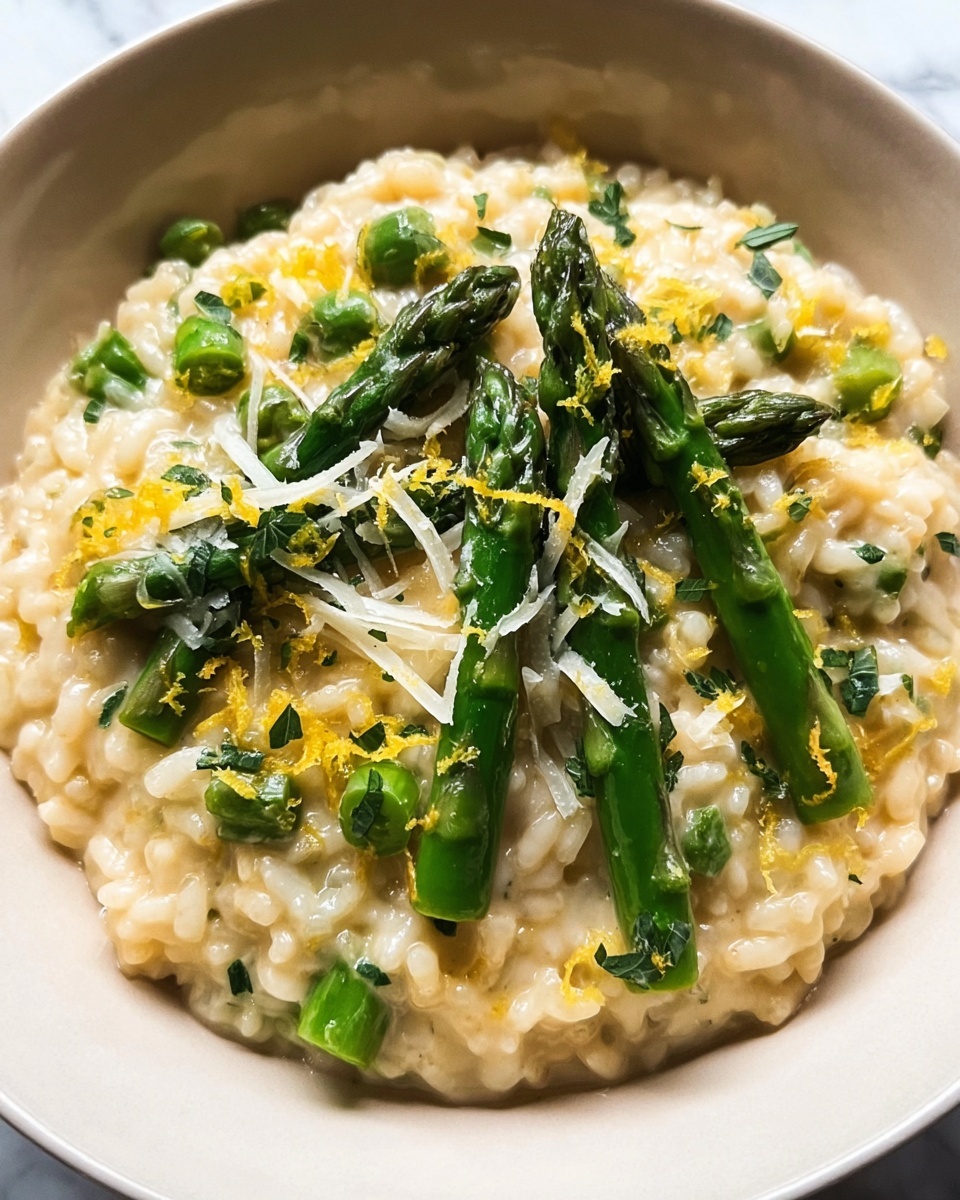
If you’ve ever wanted a dish that feels like a warm hug on a plate, let me introduce you to the magic of the Lemon Asparagus Risotto Recipe. This creamy, zesty, and vibrant risotto brings together the bright freshness of lemon with tender asparagus, all wrapped up in the luscious creaminess of slow-cooked arborio rice. It’s the perfect balance of flavors and textures that can brighten any meal, be it a cozy solo dinner or a festive gathering with friends. Once you try this Lemon Asparagus Risotto Recipe, you’ll find it hard not to make it a regular on your table.
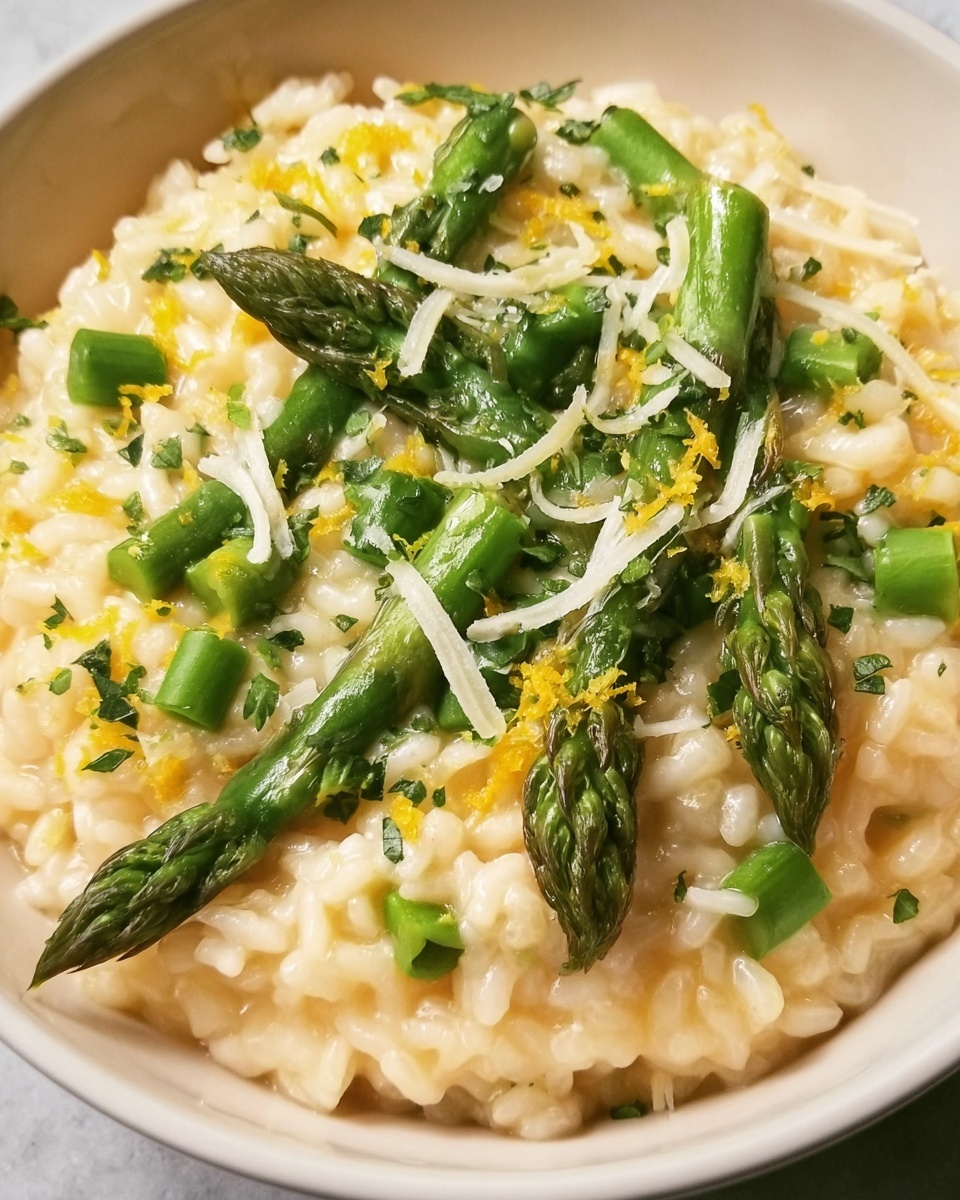
Ingredients You’ll Need
These ingredients are straightforward but each plays a pivotal role in building the layers of flavor, creaminess, and freshness that make this recipe so irresistible. From the aromatic onion and garlic to the tangy lemon and the tender asparagus, every component shines.
- Olive oil: Adds a subtle fruitiness and helps soften the onions gently.
- Butter: Brings richness and creaminess to the risotto’s texture.
- Small onion (finely chopped): Provides a savory, sweet base that melts into the rice.
- Garlic (minced): Adds a warm, aromatic depth without overpowering the dish.
- Arborio rice: The star starch that creates that signature creamy risotto consistency.
- Dry white wine: Introduces acidity and complexity, lifting the flavors beautifully.
- Low-sodium vegetable or chicken broth (warmed): Essential for slowly cooking the rice and infusing subtle savory notes.
- Asparagus (trimmed and cut into 1-inch pieces): Adds a fresh green element with a slight crunch and springtime brightness.
- Lemon zest: Delivers aromatic citrus oils for an invigorating burst of flavor.
- Lemon juice: Provides tanginess that brightens and balances the creaminess.
- Grated Parmesan cheese: Offers a salty, nutty complexity and creamy finish.
- Salt and black pepper: Essential seasonings to taste, enhancing all the other flavors.
- Chopped fresh parsley (optional): A fresh, herbaceous garnish that adds color and an herby note.
How to Make Lemon Asparagus Risotto Recipe
Step 1: Sauté the aromatics
Start by heating your olive oil and butter in a large skillet or saucepan over medium heat. Once the butter has melted, add the finely chopped onion and cook it gently for about 3 to 4 minutes until it’s soft and translucent. Then toss in the minced garlic and stir for another 30 seconds, making sure it doesn’t brown. This builds the fragrant base for your risotto, setting the stage for all the delicious flavors that follow.
Step 2: Toast the rice
Next, add the arborio rice to the pan, stirring constantly to toast the grains for 1 to 2 minutes. This step is crucial because it helps the rice absorb liquids better and creates that perfectly creamy texture you want. You’ll notice the grains start to look a little translucent around the edges while still opaque in the center—that’s just right.
Step 3: Deglaze with white wine
Now pour in the dry white wine and stir regularly until it’s mostly absorbed by the rice. The wine adds a fruity acidity that cuts through the richness and lifts the whole dish, giving it a subtle complexity that’s hard to beat.
Step 4: Slowly add broth and cook the rice
Begin ladling in your warm broth one scoop at a time, stirring often and waiting for each addition to absorb before adding more. This gradual process is what transforms the arborio into luxuriously creamy risotto. Keep at it for about 15 minutes, maintaining gentle heat to coax the starches out without burning the rice.
Step 5: Add asparagus and finish cooking
When the rice is nearly tender but still a bit firm in the center, fold in the asparagus pieces. Continue cooking for another 5 to 7 minutes, adding broth as needed until the rice is creamy and tender and the asparagus is cooked but still pleasantly crisp. This keeps the veggies vibrant in color and texture, adding freshness to each bite.
Step 6: Stir in lemon and cheese
Remove the pan from heat and stir in the lemon zest, fresh lemon juice, grated Parmesan cheese, salt, and pepper. Let the risotto rest for a couple of minutes; this short pause helps everything meld beautifully, enhancing that irresistible creamy tang. Give it a final stir before serving.
How to Serve Lemon Asparagus Risotto Recipe
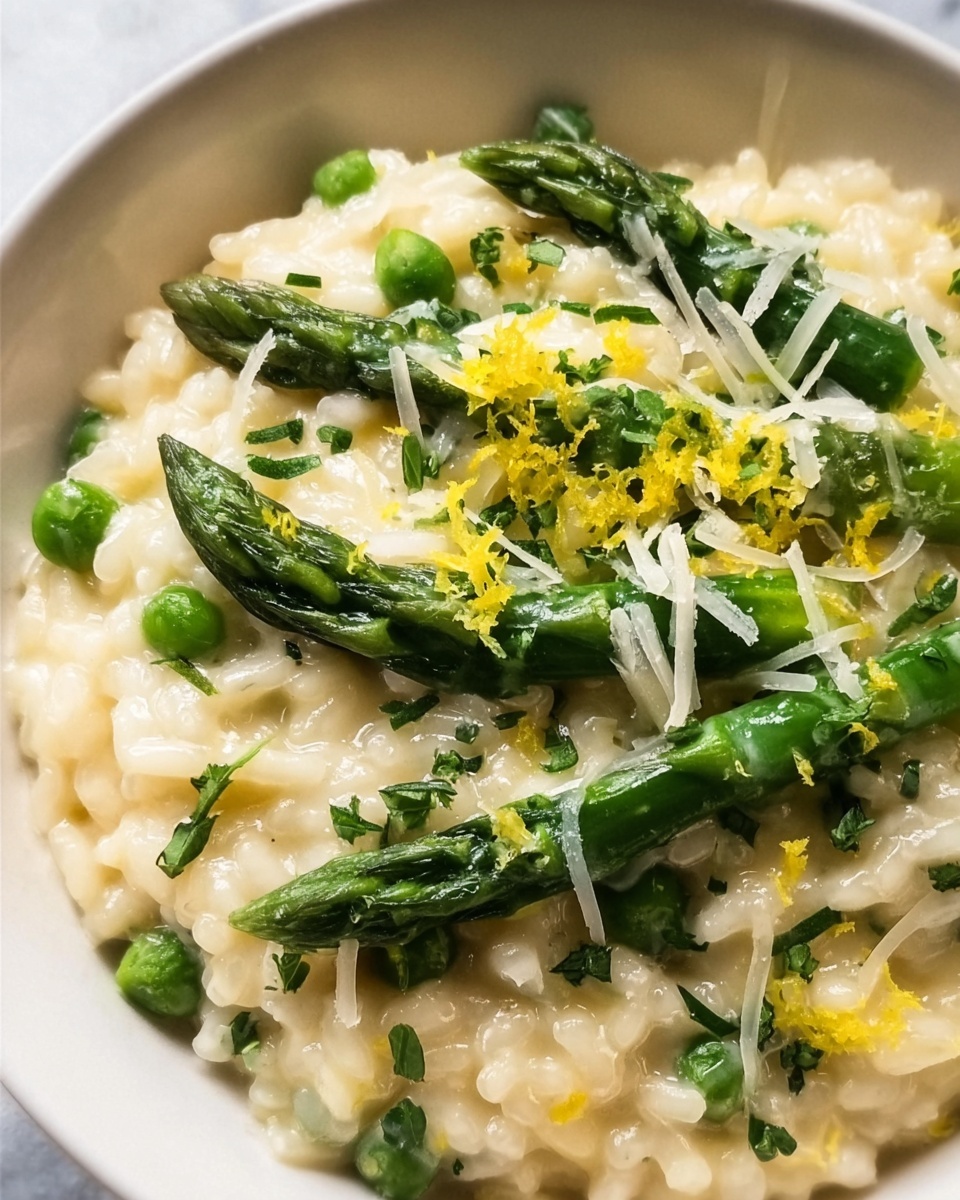
Garnishes
A sprinkle of chopped fresh parsley not only adds a lovely pop of green but also brings a mild herbaceous freshness to contrast the creamy risotto. If you’re feeling fancy, a few extra shavings of Parmesan on top elevate the dish’s richness even more.
Side Dishes
This Lemon Asparagus Risotto Recipe pairs wonderfully with grilled chicken or delicate seafood like pan-seared scallops or shrimp. The zesty brightness of the risotto complements these proteins perfectly, creating a well-rounded and satisfying meal.
Creative Ways to Present
For a special occasion, serve the risotto in shallow bowls with a twist of lemon peel on top for a burst of color and aroma. You might also try adding roasted cherry tomatoes or a drizzle of high-quality olive oil to bring extra layers of flavor. Presentation matters, and this dish looks as good as it tastes!
Make Ahead and Storage
Storing Leftovers
If you have any risotto left, store it in an airtight container in the refrigerator for up to 2 days. The texture may firm up, but don’t worry, risotto is fabulous for next-day meals when reheated properly.
Freezing
Freezing risotto isn’t ideal because the texture can change considerably once thawed, becoming mushy or grainy. It’s best to enjoy this Lemon Asparagus Risotto Recipe fresh or stored in the fridge for a short time.
Reheating
To reheat, gently warm your risotto on the stovetop with a splash of broth or water to restore its creamy consistency. Stir frequently over low heat until heated through and luscious again.
FAQs
Can I use frozen asparagus for this recipe?
While fresh asparagus is ideal for texture and flavor, you can use frozen if fresh is not available. Just thaw and drain well before adding it during the last cooking stage to avoid extra water diluting the risotto.
What can I substitute for white wine?
If you prefer to skip the alcohol, use an equal amount of additional broth combined with a teaspoon of lemon juice or apple cider vinegar to mimic the acidity white wine provides.
Is this Lemon Asparagus Risotto Recipe suitable for vegans?
This recipe as written includes butter and Parmesan, which are not vegan. For a vegan version, use vegan butter substitutes and nutritional yeast or a plant-based cheese alternative instead of Parmesan.
Can I prepare the ingredients in advance?
Absolutely! You can chop the onion, garlic, and asparagus ahead of time and keep them refrigerated. This prep will make cooking the Lemon Asparagus Risotto Recipe quicker and more enjoyable.
How do I get the perfect creamy consistency?
Constant stirring and gradually adding warmed broth is the secret. This allows the rice to release its starch slowly, creating that signature creamy texture without being mushy.
Final Thoughts
I hope you feel as excited as I do to add this Lemon Asparagus Risotto Recipe to your cooking repertoire. It’s a lovely way to celebrate the flavors of spring with fresh, vibrant ingredients wrapped in cozy creaminess. Whether you make it for a weeknight dinner or a special occasion, it’s sure to bring smiles and warm comfort to your table. Give it a try and enjoy every delicious bite!
Print
Lemon Asparagus Risotto Recipe
- Prep Time: 10 minutes
- Cook Time: 25 minutes
- Total Time: 35 minutes
- Yield: 4 servings
- Category: Main Course, Side Dish
- Method: Stovetop
- Cuisine: Italian
- Diet: Vegetarian
Description
This Lemon Asparagus Risotto is a creamy and flavorful Italian classic perfect for spring. With tender arborio rice cooked slowly in broth and infused with fresh lemon zest, juice, and crisp asparagus, it offers a bright, refreshing dish that’s both comforting and elegant. It works wonderfully as a main course or a side dish and is suitable for vegetarians.
Ingredients
Risotto Base
- 1 tablespoon olive oil
- 1 tablespoon butter
- 1 small onion, finely chopped
- 2 cloves garlic, minced
- 1 cup arborio rice
- 1/2 cup dry white wine
- 4 cups low-sodium vegetable or chicken broth, warmed
Vegetables and Flavorings
- 1 bunch asparagus, trimmed and cut into 1-inch pieces
- 1 teaspoon lemon zest
- 2 tablespoons lemon juice
- 1/2 cup grated Parmesan cheese
- Salt and black pepper, to taste
- Chopped fresh parsley for garnish (optional)
Instructions
- Prepare the Base: In a large skillet or saucepan, heat the olive oil and butter over medium heat. Add the finely chopped onion and cook for 3–4 minutes until softened and translucent, then stir in the minced garlic and cook for another 30 seconds to release its aroma.
- Toast the Rice: Add the arborio rice to the pan and toast it for 1–2 minutes, stirring constantly to fully coat the grains with the oil and butter mixture, which helps enhance the rice’s nutty flavor.
- Add Wine: Pour in the dry white wine and cook until it is mostly absorbed by the rice, which adds acidity and depth to the risotto.
- Gradually Add Broth: Begin adding the warm broth one ladle at a time, stirring frequently. Allow each addition to be mostly absorbed before adding the next. This gradual absorption is key for the creamy texture of risotto.
- Cook Asparagus: After about 15 minutes of adding broth and stirring, stir in the trimmed asparagus pieces. Continue to cook for another 5–7 minutes, adding broth as needed, until the rice reaches a creamy consistency and is tender but still has a slight bite, and the asparagus is cooked but remains crisp.
- Finish and Season: Remove the pan from heat. Stir in the lemon zest, lemon juice, Parmesan cheese, and season with salt and black pepper to taste. Let the risotto rest for 2 minutes so flavors meld together.
- Serve: Garnish with chopped fresh parsley if desired and serve immediately while warm and creamy.
Notes
- Use fresh, thin asparagus for the best texture and a tender bite.
- For an even creamier risotto, stir in an additional tablespoon of butter just before serving.
- This dish pairs wonderfully with grilled chicken or seafood for a balanced meal.
- Stir frequently but gently during cooking to avoid breaking the rice grains.