Description
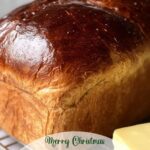
Grandma Prudy’s Rye Bread is a classic, lovingly crafted homemade bread recipe featuring a rich blend of rye and all-purpose flours, molasses, caraway seeds, and a touch of vital wheat gluten for enhanced texture. This soft, tender rye bread has a deep flavor, perfect for sandwiches or toasting with butter and preserves. The recipe guides you through the traditional process of activating yeast, kneading, multiple risings, shaping, and baking to achieve perfect loaves with a beautifully browned crust and moist crumb.
Ingredients
Scale
Yeast Mixture
- 1 scant tablespoon active dry yeast (about one 1/4 ounce packet)
- 1 teaspoon sugar (to feed the yeast)
- 1/4 cup warm water (105-110°F)
Main Dough
- 1/2 cup granulated sugar
- 2 tablespoons molasses
- 2 tablespoons shortening (butter-flavored Crisco recommended)
- 2 teaspoons kosher salt (use less if using table salt)
- 1 tablespoon caraway seed (optional)
- 2 cups warm water
- 2 cups light or dark rye flour (spooned and leveled)
- 1/4 cup vital wheat gluten
- 3 cups all-purpose flour (plus up to 1/2 cup more if needed)
Additional
- Vegetable oil or olive oil (for greasing and rolling)
- 1/4 cup butter (for rubbing on bread after baking)
Instructions
- Activate Yeast: In a stand mixer bowl, combine 1 scant tablespoon active dry yeast, 1 teaspoon sugar, and 1/4 cup warm water (105-110°F). Stir to combine and wait 5 minutes until the yeast bubbles and foams.
- Add Sweeteners and Salt: Once foamy, add 1/2 cup granulated sugar, 2 tablespoons molasses, 2 tablespoons shortening, 2 teaspoons kosher salt, and 1 tablespoon caraway seeds (if using). Stir to mix well.
- Add Water and Stir Dough: Pour in 2 cups warm water and mix with a dough hook or wooden spoon until combined.
- Add Rye Flour and Gluten: Add 2 cups rye flour and 1/4 cup vital wheat gluten to the mixture. Start mixer on low speed to avoid flour flying.
- Add All-Purpose Flour: Gradually add 3 cups all-purpose flour, one cup at a time, mixing on low speed between additions. Avoid exceeding 3 cups initially to maintain dough consistency.
- Knead Dough: Knead the dough on medium-low speed for about 5 minutes. The dough will be sticky but begin to clean the bowl edges. Add up to an additional 1/2 cup flour as needed, kneading a total of 7-10 minutes. Dough should clean sides but not bottom of the bowl. Alternatively, knead by hand on an oiled surface for 10-12 minutes.
- Prepare Bowl and First Rise: Grease a large bowl with 1 tablespoon vegetable oil. Scrape dough into it, shape into a ball, and turn to coat with oil. Cover with parchment paper or greased plastic wrap. Let rise in a warm area (oven warmed to about 100°F then turned off) for 1 hour or until doubled in size.
- Punch Down and Second Rise: Punch down dough, reshape into a ball, grease the bowl again, coat dough with oil, cover, and let rise in a warm place another hour until doubled.
- Prepare for Shaping: Punch dough down again. Prepare a work surface lightly oiled (avoid flour to prevent stiffness). Also grease four 7×4 inch loaf pans with nonstick spray. Alternatively, use two 9×5 or 8×4 inch pans.
- Shape Loaves: Divide dough into 4 equal parts. Pat each piece into a 7-inch square, fold and roll into a tight loaf, pinching edges and tucking ends underneath. Place seam side down in prepared pans.
- Final Rise: Cover pans with parchment or greased plastic wrap and let rise in a warm place for 45 minutes or until dough rises an inch or more above pan edges.
- Preheat Oven: Preheat oven to 375°F. Remove pans from warm place before baking; do not preheat oven with bread inside.
- Bake Bread: Bake 7×4 inch pans for 30-35 minutes. If using 9×5 inch pans, bake 40-45 minutes. Bread is done when an instant-read thermometer inserted in center reads 205°F (or 208-210°F for larger pans), or when top is well browned or slightly darker.
- Butter and Cool: Remove hot pans to wire racks. Immediately rub 1/4 cup butter over tops of bread to melt. Carefully turn bread out onto racks and cool on their sides to prevent squishing. Let cool 30-60 minutes before slicing.
- Slice and Serve: Use a sharp serrated knife to slice bread with gentle sawing motions. Serve with butter, jam, or other toppings of choice.
- Store Bread: Once completely cool, store in a large ziplock bag at room temperature for up to 3 days, slicing as needed. For longer storage, freeze in airtight bags for up to 3 months. Thaw at room temperature or partially frozen then toast to finish thawing.
Notes
- Use warm water around 105-110°F for yeast activation, not hotter, to avoid killing yeast.
- Do not add too much flour; rye dough should remain slightly sticky for best texture.
- The caraway seed is optional but adds authentic rye flavor.
- Keep your rising environment warm but not hot; around 75-85°F is ideal.
- Always cool rye bread before slicing to prevent crushing the tender crumb.
- Using a thermometer ensures perfectly baked bread without guessing.
- Bread can be shaped into either four small loaves or two larger loaves depending on pan size.
- Butter on hot bread is traditional and adds moisture and flavor.
- Store bread properly to maintain freshness; freezing is recommended for longer preservation.